AI Trade Intelligence for Supplier Discovery: Find Better Suppliers Faster
- Blog, Trade data
- May 14, 2025
Finding reliable suppliers is harder than it looks. Procurement and operations teams are dealing with rising tariffs, supply chain disruption, tighter sourcing scrutiny, and less room for error. The result is simple: teams need to make better supplier decisions faster.
That is where AI trade intelligence becomes useful. When you combine shipment data with AI-assisted company profiling, supplier research becomes less manual and more source-based. Instead of working from a name on a spreadsheet, teams can evaluate trade history, customer relationships, shipment timing, and supplier consistency in a much more practical workflow.
TL;DR
- AI trade intelligence helps teams find suppliers faster by turning raw shipment records into research-ready supplier profiles.
- Good supplier discovery is not just about finding names. It is about verifying reliability, buyer relationships, shipment cadence, and timing.
- Trade data becomes far more useful when AI helps summarize and compare suppliers at scale.
- The same workflow can support procurement, sourcing, market intelligence, and competitor monitoring.
- AI Company Profiler as a way to layer company context on top of trade data so teams can make more confident decisions.
Why supplier discovery is getting harder
Trade and sourcing decisions now carry more operational risk than they did a few years ago. A supplier choice can affect:
- landed cost
- tariff exposure
- delivery continuity
- compliance risk
- speed to market
Large enterprises may have buffers, broader vendor networks, and internal research teams. Small and mid-sized businesses usually do not. They still need to react to disruptions, but they often do it with less time, less visibility, and fewer research resources.
That is why the problem is not just “find more suppliers.” The real problem is find suppliers you can trust, compare them quickly, and act before the market moves again.
What AI changes in a trade data workflow
Trade data has always been useful for supplier discovery. Even one bill of lading can confirm that goods moved from one company to another. The challenge starts when a team has to analyze thousands of records across multiple markets, products, and counterparties.
Without AI support, the workflow is usually slow:
- Pull a list of possible suppliers from shipment data.
- Check names manually.
- Research each company one by one.
- Cross-check buyer relationships and shipment patterns.
- Try to summarize the findings in a way the team can actually use.
AI improves this process by compressing the research layer. Instead of leaving teams with raw records alone, an AI-assisted workflow can help surface:
- product focus
- shipment history
- customer relationships
- company context
- timing patterns
- higher-confidence supplier comparisons
That shift matters because it turns raw trade data into a more usable supplier intelligence workflow.
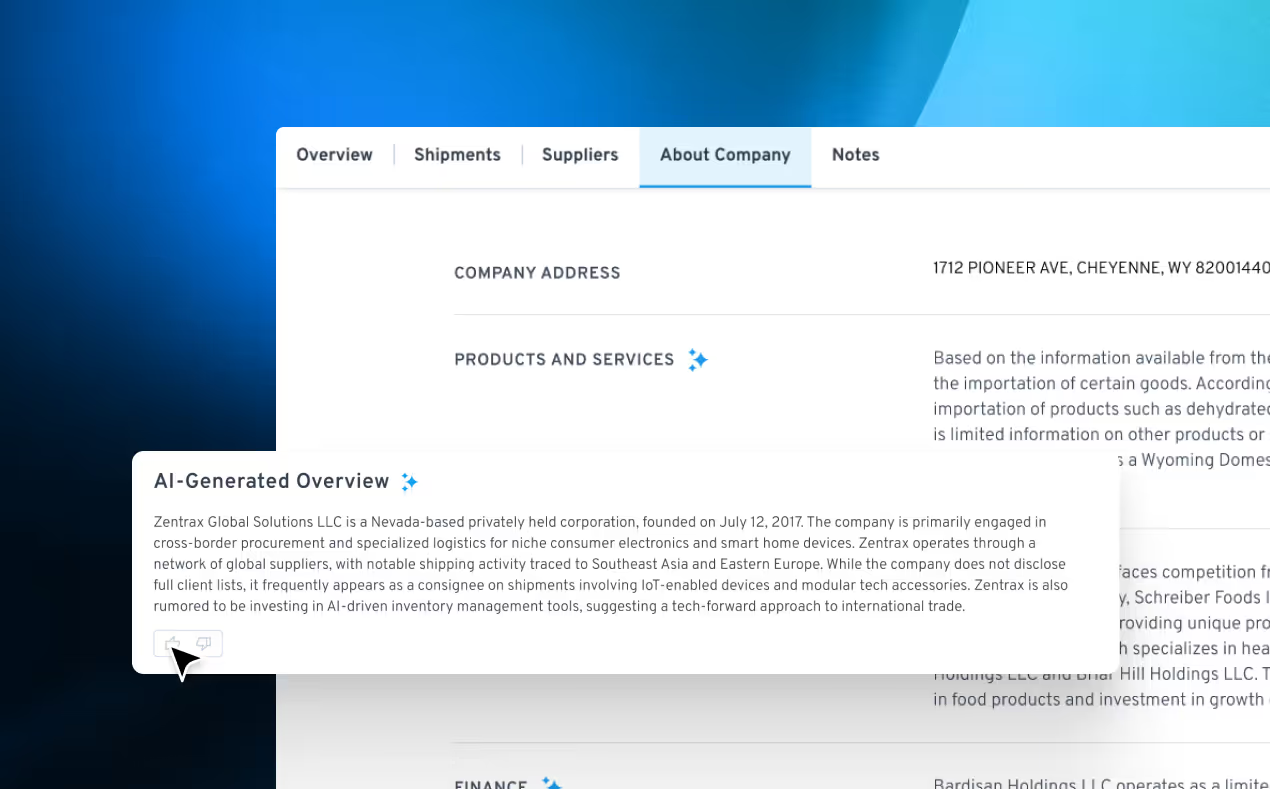
How the AI Company Profiler fits
The core idea is straightforward: when you click into a supplier, you should not have to start a separate research project. You should be able to understand the company in context.
- company background
- shipment consistency
- apparent product focus
- customer relationships
- financial or stability signals
- contact context for follow-up research
This is especially useful for long-tail suppliers and international companies that may not appear cleanly in traditional supplier databases.
1. AI makes good trade data more usable
AI does not replace the need for reliable shipment data. It makes that data easier to interpret and operationalize.
That distinction matters. If the underlying trade records are weak, AI will not fix the problem. But if the records are strong, AI can help teams move from scattered inputs to a clearer shortlist much faster.
For sourcing teams, the best use of AI is not novelty. It is speed, structure, and faster judgment.
2. Better supplier intelligence goes beyond price
In that example, AI-assisted trade intelligence helped identify major Indian suppliers, confirm that they shipped consistently into the U.S., and reveal recognizable customers such as Walmart and IKEA. Those details matter because they help answer better procurement questions:
- Has this supplier shipped consistently over time?
- Are they already serving demanding buyers?
- Do they look concentrated or diversified?
- Are they established enough to support scale?
That is the difference between finding a supplier name and building a supplier vetting workflow.
3. Shipment timing can create a strategic opening
That kind of signal matters because timing changes the value of supplier intelligence. Trade data is not only useful for knowing who ships what. It can also help teams understand:
- when a buyer appears to replenish
- when a competitor relationship is active
- when a sourcing window may reopen
- when outreach or supplier engagement is more likely to be relevant
In other words, trade intelligence can support both procurement timing and competitive timing.
What teams can actually do with AI trade intelligence
The value of AI trade intelligence is not limited to one department. A strong workflow can support several business jobs.
Supplier discovery and backup supplier planning
Procurement teams can use shipment data and AI profiling to identify alternative manufacturers, validate shipping activity, and reduce the time it takes to build a more credible shortlist.
Related page: Strategic sourcing and supply chain diversification
Supplier vetting and reliability checks
Teams can review shipment frequency, buyer relationships, and trade consistency before committing time to outreach, qualification, or onboarding.
Related page:
Competitor sourcing analysis
Strategy and commercial teams can study where competitors appear to source, which counterparties they rely on, and how those relationships evolve over time.
Related page: Market intelligence with trade data
Import monitoring and timing alerts
When timing matters, alerts and recurring trade monitoring can help teams notice activity changes earlier instead of repeating manual searches.
Related page:
A simple workflow for finding better suppliers faster
If your team wants to operationalize this approach, the workflow can be simplified into five steps.
1. Start with the product, region, or trade lane you care about
Define the sourcing question clearly. Are you replacing a current supplier, looking for backup capacity, or exploring a new market?
2. Pull candidate suppliers from shipment data
Use trade data to identify companies already moving relevant products in the regions that matter.
3. Layer AI profiling onto the shortlist
Summarize each candidate’s company context, shipment history, likely customer base, and stability signals.
4. Compare for fit, not just for visibility
A visible supplier is not automatically the right supplier. Compare consistency, customer quality, apparent specialization, and timing.
5. Move the best candidates into a human review process
AI should speed up supplier research, not remove procurement judgment. The final step is still human validation, outreach, and qualification.
help teams get from shipment data to a usable supplier decision faster.
That is a stronger message for procurement and trade intelligence buyers because it connects the product to a real business job:
- identify suppliers
- evaluate them faster
- monitor market movement
- act with better timing
Frequently asked questions
What is AI trade intelligence?
AI trade intelligence is the use of AI to summarize, analyze, and operationalize trade data so teams can answer sourcing, supplier, market, and competitor questions faster.
How does trade data help with supplier discovery?
Trade data shows which companies are shipping relevant products, who they appear to trade with, and how often those relationships occur. That gives procurement teams a stronger starting point than generic web research alone.
Can AI replace supplier vetting?
No. AI can reduce manual research and help structure the first pass, but supplier qualification still requires human review, commercial diligence, and compliance checks.
What signals matter most when comparing suppliers?
The most useful signals often include shipment consistency, customer relationships, product relevance, geography, and timing. Price matters, but it should not be the only filter.
Is this only useful for procurement teams?
No. The same workflow can support market intelligence, competitor analysis, import monitoring, supply chain risk management, and executive planning.
Related reading
Next step
If your team needs a faster way to move from raw shipment records to a more credible supplier shortlist, trade intelligence workflow is designed to make that research more actionable.